
Recent posts:

Knowing Truthfully in a Deceptive World
All good writing is born of frustration. The writer stumbles upon a truth that needs to be said, which forces him out of complacency and into work. For example, why do people not change their minds when faced with unexpected evidence? For me, originally trained as a scientist, that’s the…

What’s the Task for Liberal Christians?
Visiting the University of Notre Dame recently was a powerful reminder of what conservatives have accomplished. Even at weekday Masses, the church was full of students. The intellectual climate at the conference I attended was vibrant. The median age of attendees seemed to be about 30. Notre Dame itself continues…
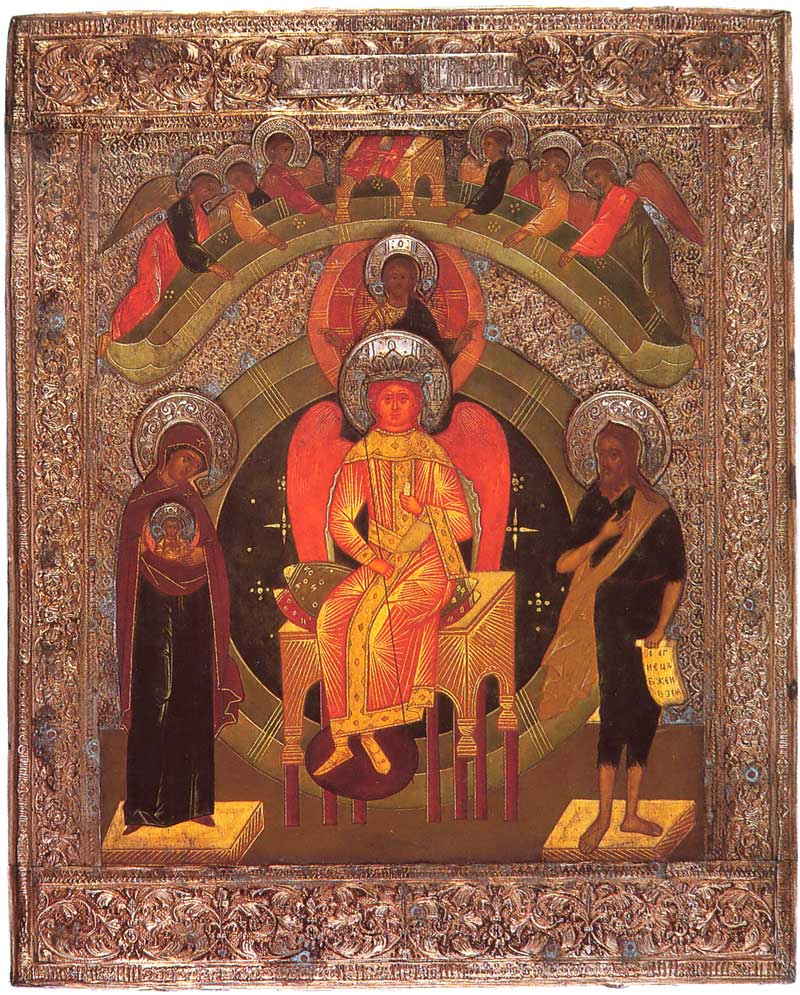
Beauty to Guide Us from Knowledge to Wisdom
It’s good to have knowledge, but it immediately raises the question of how to use it. At first glance, it seems so easy. “Follow the science!” Now, with AI, you do not even have to understand all the details, as chatbots help you find answers. AI has mapped knowledge, creating…

The Wisdom of Edith Stein
I’m at the de Nicola Center’s Fall Conference at the University of Notre Dame, which has just begun, and our theme is “But Where Can She Be Found? Wisdom from Age to Age.” So what marks wisdom in scholarship? What distinguishes the scholar who is wise from the one who…

How Could You Possibly Not Care About Physics?
When people tell me that they are just not interested in science, especially not if it’s physics, then I simply do not know what to say. How could they? It’s like not being interested in art. How could one say “I don’t like art” and live? Why is physics not…

Does It Think?
My first model organism was Physarum polycephalum. We studied how gene expression changes as cells grow and prepare to divide, and P. polycephalum is an especially good choice for this. It behaves as if it were a single giant cell, even though it is tens of centimetres across. We could…

What Is Nature? What is Natural?
My preferred definition of nature is very broad: It is the context of our human acting that is not of our making. This means much more than the natural sciences usually consider, which is how I want it to be, as I want to speak of an insight from faith….

Being a Missionary
When it comes to making sense of my life as a Franciscan in this secular age, I turn to Chapter XVI of the Early Rule. It is where Francis speaks to those of his brothers who plan to go and live among non-Christians. Many went to North Africa, into what…

The Limit, the Heart, the Grandeur of the Human Person
In the story of Icarus, the Greek gods punish those who dare to come too close to their domain. Naturally, there’s resentment towards such divinities. We’d be better off without them and explore human potential to its fullest. Don’t fly too high; don’t fly too low; try to stay safely…

Remaining Human
The introduction to Pope Leo’s Magnifica Humanitas closes with a paragraph entitled “remaining human.” This is the encyclical’s focal point, asking the one question that matters: What does it mean to be human? What truly sets us apart from all else in nature? Since the usual answer are language, abstractions,…

New Developments in Franciscan Studies
Multidisciplinary collaborative work has a long history in the Franciscan Order. I will just mention two examples: Roger Bacon, who insisted that absolutely everything that is known ought to be understood by the friars and put in the service of preaching the Gospel, and the group of medieval Franciscan scholars…

Disarming Words
One short but very important section of Pope Leo’s encyclical Magnifica humanitas reminds us of the need to disarm words. We must disarm the words that we use, and we must also choose words that themselves disarm. Well-chosen words create peace; well-chosen words create understanding. This, too, must be seen…

Contemplating Technology?
Franciscans can be just as scholarly as Dominicans, but the distinctive mark of our tradition is contemplation. It is meant to teach us to see the goodness God intended in all things. It’s obvious when we stand in a beautiful valley, in a meadow, surrounded by flowers and mountaintops. We…

The Language of Life
Life was very obvious in the day of St. Francis; what needed explanation was death. Even the celestial bodies were thought to be alive, and St. Francis could speak of them as Brother Sun and Sister Moon. Modern science has turned things around: The cosmos is full of lifeless matter,…

Franciscan Life and the Scientific Vocation
With the memory of meeting Catholic Scientists still fresh on my mind, I travelled to a Franciscan conference. The occasion was the 800th anniversary of the death of St. Francis of Assisi and his passing into eternal life. Both the Order and society are changing in fundamental ways, and we…

Catholic Faith and the Scientific Vocation
Over the past ten years, which is not very long by the standards of scientific societies, the Society of Catholic Scientists has held annual meetings. I attended most of them. But how is being a Catholic Christian part of being a scientist? We believe that faith and reason are inseparable….

Cooperation or Competition?
I already spoke in an earlier post about how there are parallels between the way evolution works and the way AI works. Both depend on chance and necessity. But there is something else that computer scientists thinking about AI can learn from evolution. It is the importance of novelty arising…

Technology and Humanity’s Greatest Problems
According to one of my Franciscan brothers, when farmers discovered that artificial fertilizer does more for the harvest than a priest’s blessing of the fields, the crisis of faith characteristic of the modern age began. Seeing a technology’s results changes one’s outlook. But once we understand why artificial fertilizer works…

Life and Being Human. AI and Intelligence.
There’s a parallel between AI and evolution. Both work with chance and necessity. Just as there is no intelligence guiding evolution, there is no intelligence guiding AI. It just charts a space through what is already known while making an occasional random change that creates something new. The “I” in…

Building up Life
What is life? How does it differ from matter as understood by physics? In physics, it does not matter what time it is; its laws are always the same. It does not even matter whether time moves forward or backward. But in life, time matters a great deal more. Life…

What is the task of a Franciscan scholar?
What do Franciscans contribute today? This question was foremost on my mind as I attended the Franciscan Studies conference that brought me to Europe this year. We are heirs to a specific tradition in medieval philosophy, but more importantly, we are stewards of a religious tradition attentive to nature. Today,…

Nature and Acting Naturally
I am almost en route to a Franciscan conference in Durham, UK, where my contribution will be a talk about a Franciscan philosophy of nature in a Steinian key. My desire to come up with something new began with my first encounter with Thomism. Was it not obvious, I thought,…

The Goodness of Being Defective
There is a lacuna in the Christian language about nature that requires a lot more attention than it has received. Modern science, by understanding the human body through evolutionary biology, tells us quite clearly that there is no such thing as one perfect human nature that is free of defects….

The Individual and the Community
Something done very beautifully in the philosophy of Edith Stein is the relationship between the individual and the community. It helps navigate conflicts of interest, such as when there are my rights and needs and those of the community, and what must I do when they do not align? There…

Seeing Nature in Its Fullness
There is a famous paper, written by Lynn White in 1967, about human carelessness regarding nature, and it holds up St. Francis as someone who can show us a better way. There is just one problem with this. St. Francis’s approach to nature was entirely intuitive, but is this still…

Nature’s Goodness and the Goodness of Its Science
Everybody knows of Franciscan nature spirituality, but understanding a Franciscan vocation begins by understanding the moment of St. Francis’s conversion. “When I was in sin,” he writes in his spiritual testament, “it seemed very bitter to me to see lepers.” Sin made him recoil from the suffering of lepers, but…

Metaphysics. It Matters.
This blog has very intentionally started with a diverse range of topics—artificial intelligence, physics, human rights, Edith Stein, forgiveness, and Franciscan studies. What is holding it together? Where is the common ground for it all? It is the philosophy of Edith Stein, particularly her realism regarding meaning. Being is the…

Will AI Save the Humanities?
Academic work typically drills a deep and narrow hole into knowledge space, and this comes with well-known risks. There’s an old quip that a true expert is someone who knows everything about nothing, and it first appeared in print in 1928. The problem is not depth itself but the illusion…

Human Rights and Modern Physics
An odd combo: One places the individual human person on a pedestal, and the other ignores it. Yet both are fruits of modernity. The former protects the individual’s autonomy in choosing a path in life, and the latter brackets all meaning from the physical circumstances of this life. This leaves…

An Overlooked Human Right: Forgiveness
There is a remarkable little detail in the life of the philosopher Robert Spaemann, born in Germany in 1927. In 1944, at the age of 17, he wanted to know what had happened to the Jews. He asked German soldiers returning from the Eastern Front, and they told him the…

Rewilding Franciscan Studies
My first academic degree is an MSc in chemistry, earned after five years of studying chemistry. I acquired considerable expertise in inorganic, organic, and physical chemistry, both practical and theoretical. And then, I just moved on; I never worked in these fields. Instead, I did something completely different and turned…

The Franciscan Philosophy of Edith Stein
She was a Discalced Carmelite, now known as St. Teresia Benedicta a Cruce, canonized on account of the extraordinary witness of her faith. She was a Jewish convert to Catholicism, murdered alongside her people in Auschwitz. Today, she is deeply appreciated by many for the spiritual depth of her writings,…

Why this blog?
I had a blog before, ten years ago, but there was a problem. Blogs must be short. 500 words seems about right for them. But how can I say something meaningful about the big questions that interest me the most, such as: How is a living being different from matter,…
That’s all for now, thanks for reading!