
Books
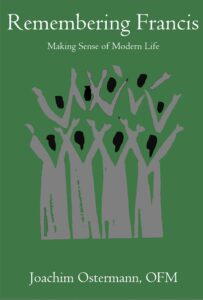
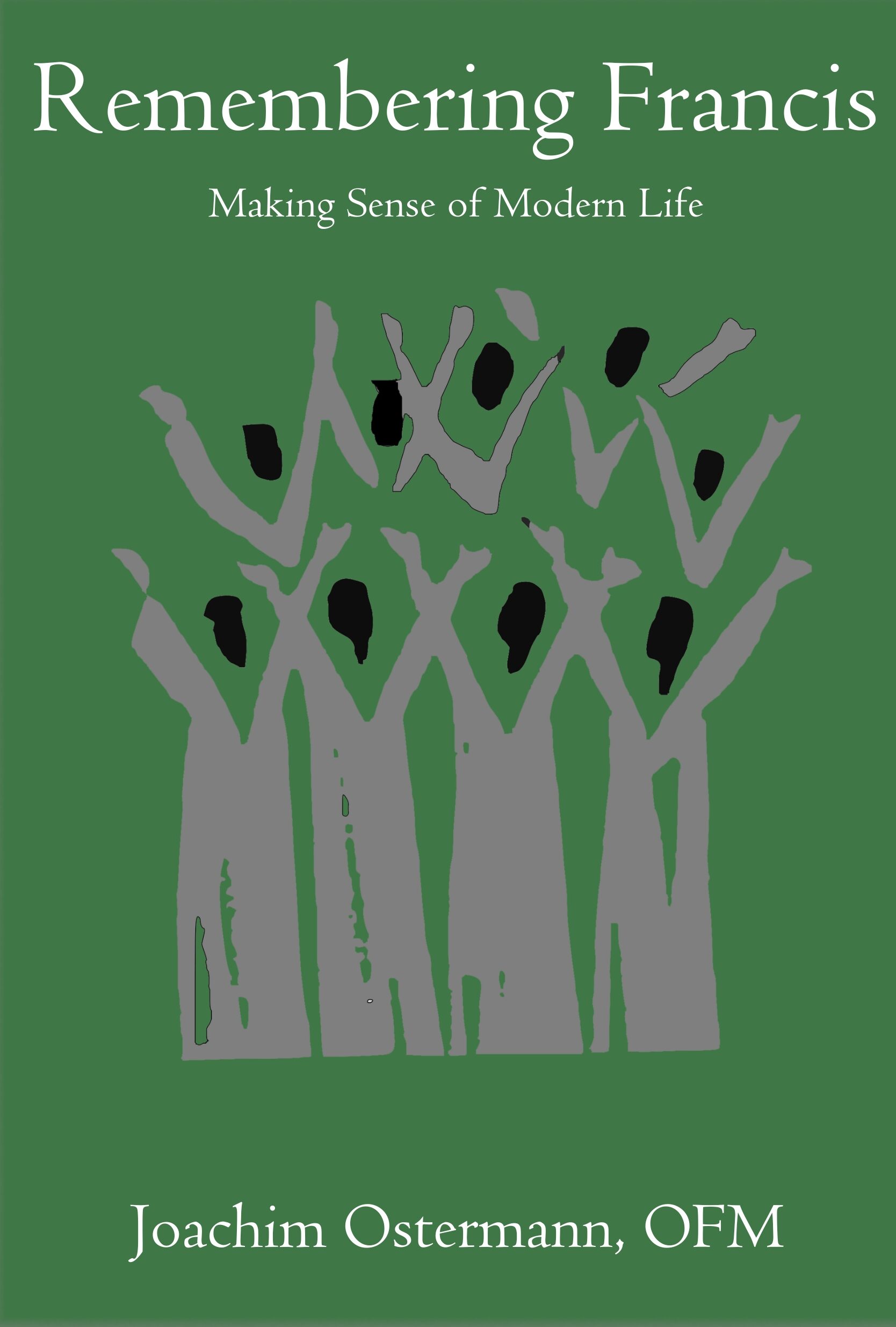
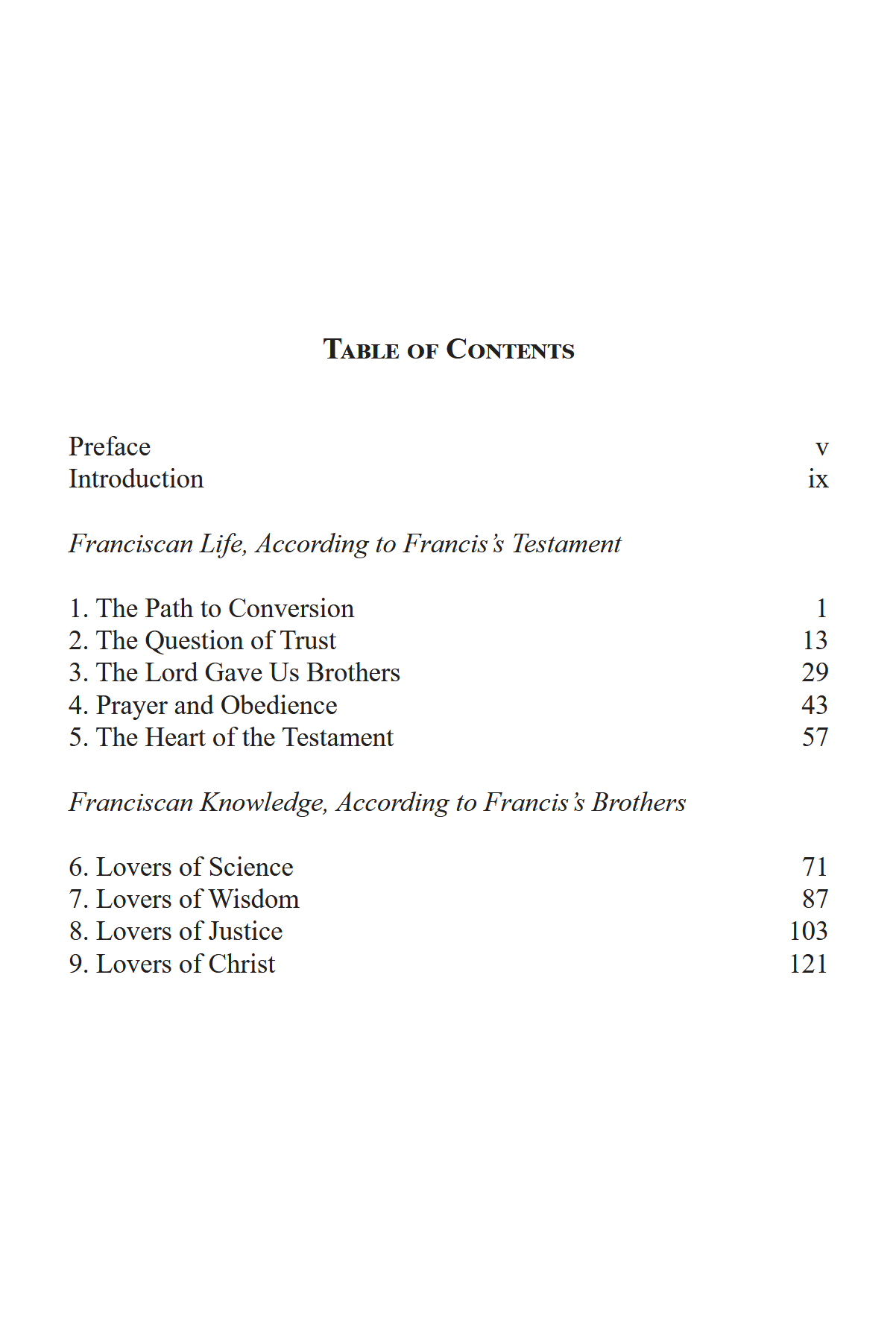

Remembering Francis
Making Sense of Modern Life
Franciscan Institute Publications, 2021
Sorry, print copies are sold out, but the e-book remains available.
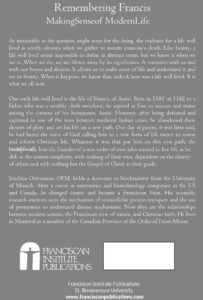
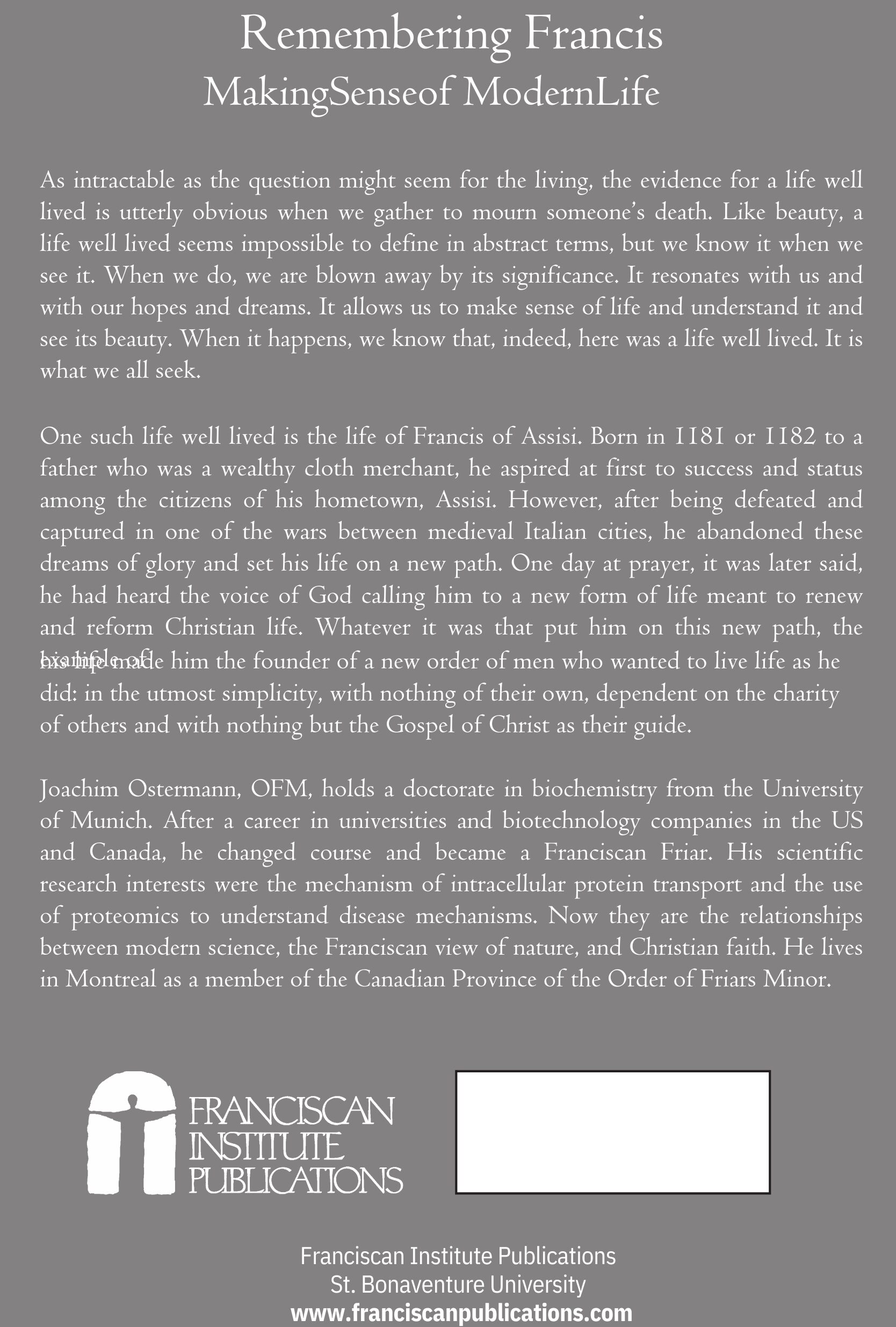
As intractable as the question might seem for the living, the evidence for a life well lived is utterly obvious when we gather to mourn someone’s death. Like beauty, a life well lived seems impossible to define in abstract terms, but we know it when we see it. When we do, we are blown away by its significance. It resonates with us and with our hopes and dreams. It allows us to make sense of life and understand it and see its beauty. When it happens, we know that, indeed, here was a life well lived. It is what we all seek.
One such life well lived is the life of Francis of Assisi. Born in 1181 or 1182 to a father who was a wealthy cloth merchant, he aspired at first to success and status among the citizens of his hometown, Assisi. However, after being defeated and captured in one of the wars between medieval Italian cities, he abandoned these dreams of glory and set his life on a new path. One day at prayer, it was later said, he had heard the voice of God calling him to a new form of life meant to renew and reform Christian life. Whatever it was that put him on this new path, the example of his life made him the founder of a new order of men who wanted to live life as he did: in the utmost simplicity, with nothing of their own, dependent on the charity of others and with nothing but the Gospel of Christ as their guide.
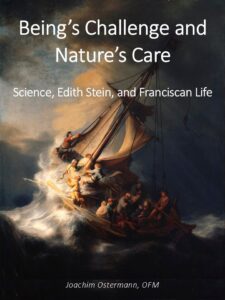
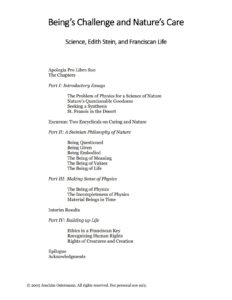
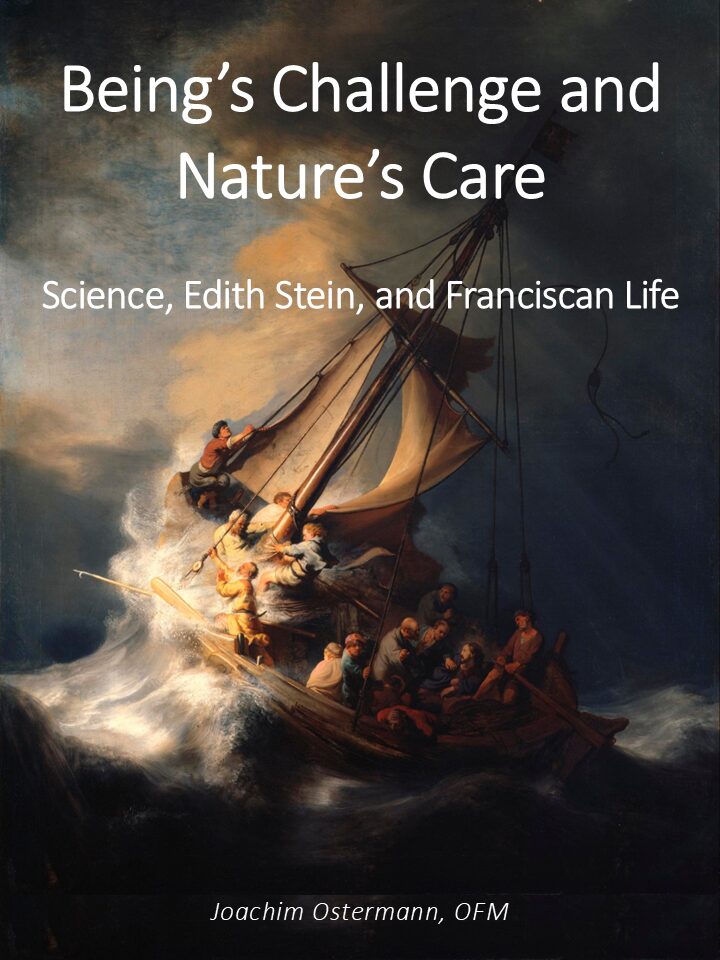
Being’s Challenge and Nature’s Care
Science, Edith Stein, and Franciscan Life
Expected release in 2026
Submitted for publication and currently under peer review.
Print Articles
The Science and Christianity Relationship as an Interreligious Dialogue
J. Ecumenical Studies, 43 (4), 596-606 (2008)
Online at EBSCOhost ATLA Religion Database
This was my first published article; it was written after my first year of studies. I wondered whether we have to speak of the science-is-everything worldview as a kind of faith and engage it as such. But I list it here only for sake of comprehensiveness. I think that I oversimplified a lot in this paper.
Mercy and the Modern Sciences
Franciscan Connections: The Cord – A Spiritual Review, 66 (2), 7-9 (2016).
https://cdn.shopify.com/s/files/1/1017/5297/files/66.2.pdf
Can God’s mercy and providential care still be seen in nature and the science of nature? This is the first article in which I struggle with this question. I conclude that the scientific view is a global view, looking at the cosmos as if one. But the Franciscan view is the view from the inside, which is the proper place of the human person within creation, and only from there can mercy and the modern sciences be reconciled.
The Importance of Being a Groundhog
Franciscan Connections: The Cord – A Spiritual Review, 66 (3), 15-17 (2016).
https://cdn.shopify.com/s/files/1/1017/5297/files/66.3.pdf
A living being is not just a few lines written in mathematical language in the story of the cosmos. St. Francis’s insight of fraternity, fraternity with all creatures, is the means towards reconciling two languages of the book of nature. Only from this perspective of fraternity can we properly read the book of nature. We understand nature from the inside, as one creature among other creatures.
Nature, Meaning and COVID-19
Franciscan Connections: The Cord – A Spiritual Review, 70 (2), 18-19 (2020).
Not online; manuscript available on request for private use
During the pandemics, “follow the science” was a frequent commandment. But science will give us tools to use without telling us what it means to act with prudence and foresight. “To use scientific knowledge responsibly, we need to start with a bigger picture view in which all of life’s experiences find their place. This is where our Franciscan spirituality comes in. Franciscan thought finds it centre in Christ alone. Being drawn towards this centre, we can come together in peace and not be scattered by fear. We can make sense of life, our place in the world, and what we see in the world, without fear and with confident faith.”
Fraternity as Natural Being
Religions, 13(9), 812 (2022).
https://www.mdpi.com/2077-1444/13/9/812
I had been invited to contribute to a special issue on the topic of “The Franciscan Intellectual Tradition: Sustaining Hope Amid a Climate Emergency and Political Polarization.” I conclude that “fraternity is a relationship of mutual understanding of dependency on care, and through fraternity, I understand the needs of individual creatures and the meaning of my autonomy. It brings together what would otherwise be irreconcilably opposed—the interests of different people with different conceptions of their own personal good. Our shared human nature and the shared nature of living beings is the best foundation on which to find common ground in times of political polarization and environmental crisis.”
Metaphysics, Physics, and the Rights of Creatures: Philosophical Foundations for a Franciscan View of the Scientifically Understood World
In Lesser Ethics Retrieving the Good Life in the Franciscan Tradition.
Edited by Krijn Pansters and David B. Couturier.
St. Bonaventure, NY: Franciscan Institute Publications (2023).
Not online; manuscript available on request for private use
This paper, prepared for a Franciscan conference in 2022, is the first paper in which I work with the philosophy of Edith Stein. “I want to show how our various ways of knowing can be brought together. I will start with science, as so much depends on it. Modern scientific understanding of nature misleads by concealing the reality of the individual being and thereby, its rights. However, the reality of individual beings is logically prior to physics. We must begin with understanding being, care, and rights. By discovering our being and the being of others, we discover complementary insufficiencies and relationships of mutual care and dependence. Modern science understands the material abstraction of being, or prime matter in the language of Aristotelian metaphysics. “Lesser ethics” emphasizes the minority of individual being and rights originating in mutual dependencies. I propose to understand lesser ethics as understanding natural being through receiving and offering care.”
Environment and Common Home: Nature Known Humanely and Inhumanely
Grüne Reihe, 124, 31-36 (2023).
https://www.franciscanfriars.ca/blog/joachim-ostermann/environment-or-common-home/
The significance of this contribution might be that it is the first text since my doctoral thesis that I wrote in German. It is on the topic of what it means to consider nature not just our environment but our common home. It was written for the magazine of the Missionszentrale der Franziskaner. I later translated it into English and French.
Among Lepers
Submitted for publication and currently under peer review
The medieval leper as a reviled outcast remains a beloved trope in contemporary writings about St. Francis, as it shows the saint turning to those whom society uncaringly cast aside. Many modern Franciscans identify both with such a leper and the saint in their self-understanding. However, the last 30 years of historical scholarship on leprosy and its understanding in 13th-century Italy show that this misrepresents the actual Francis of Assisi in his own time. I will begin by presenting this research and then ask whether the passages mentioning lepers and leprosaria in the Franciscan sources support or challenge this scholarship. What emerges is that the work of Francis and his brothers is conducted from within the larger community. Rather than responding to a lack of compassion or an act of persecution—and implicitly chiding their neighbours for permitting it—they found a place to serve Christ by recognizing him already active in their midst. In this way, they succeeded in “leaving the world” without leaving their brothers and sisters. The work of early Franciscans is not an activist response to social shortcomings but a way to reveal the humble Christ working and suffering with us in the world.
Online Articles
A Philosophy of Following the Science
Church Life Journal (McGrath Institute of Church Life, University of Notre Dame
August 17, 2021
(https://churchlifejournal.nd.edu/articles/a-philosophy-of-following-the-science/).
Transitioning from Science to Philosophy
Church Life Journal (McGrath Institute of Church Life, University of Notre Dame)
March 31, 2022
https://churchlifejournal.nd.edu/articles/transitioning-from-science-to-philosophy/
Science Papers
Lastly, for comprehensiveness’ sake, here are the more important of my publications as a scientist: